

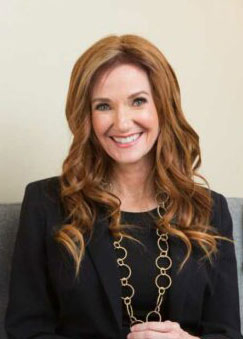
Certified Gottman Therapist
Licenses:
California LMFT #99008 | Texas LMFT #205614
Dr. Dana McNeil is a licensed marriage and family therapist and the founder of The Relationship Place, a San Diego couples therapy practice specializing in high-acuity relationships, emotional disconnection, conflict repair, and intimacy concerns. She has achieved the highest level of training in the Gottman Method Couples Therapy and is known for her compassionate, direct, and practical approach to helping couples rebuild trust, communication, and closeness.
She is also the founder of Therapy Getaway, a structured couples intensive model designed for couples seeking deep, focused relationship repair. Dana has specialized expertise in midlife marriage challenges, empty nest transitions, and gray divorce, and provides training and professional education for therapists, including work connected to the Gottman Institute.
Her expertise has been featured in national publications including Oprah Daily, Martha Stewart Living, Men’s Health, Bustle, and SELF Magazine.
She is passionate about helping couples move from feeling like roommates to rebuilding emotional and physical connection.
- Why Am I So Anxious in My Relationship? - October 9, 2026
- Breadcrumbing in a Relationship: Why Crumbs Never Add Up to a Cupcake - September 25, 2026
- Dr. Dana McNeil Featured in Good Housekeeping: The Real Lesson Behind “Gummy Bear Mom” Parenting - September 9, 2026
What My Conversation with The Washington Post Made Me Think About Long-Term Love
When The Washington Post recently interviewed me about retirement and relationships, I was glad to see a national conversation turn toward something I discuss with couples every week. Retirement is often treated as a financial event. In my therapy office, it’s usually a relationship event.
We spend decades preparing retirement accounts, meeting with financial planners, and imagining what life will look like once work slows down. Far fewer couples prepare for what retirement asks of their relationship.
You can read the original Washington Post article here.
After reading the article, and the hundreds of reader comments beneath it, I realized there was more to say. Retirement doesn’t simply end a career. It often reveals the relationship you’ve been building for decades.
“This Should Be the Best Time of Our Lives”
Recently, I sat with a couple whose story has stayed with me. As with all examples I share, identifying details have been changed to protect confidentiality, but the dynamic itself is one I see often.
On paper, they had built the retirement many people dream about. They had worked hard, and they were financially secure, with beautiful homes and still the health, time, and resources to travel and enjoy life together.
“This should be the best time of our lives,” the husband told me. “We finally have the money, the time, and the energy to enjoy everything we’ve worked for.”
His disappointment was unmistakable. He wanted his wife to see everything he had spent thirty years building for their family—the career, the financial security, the dream home. To him, those things were expressions of love.
His wife sat across from him with a face that gave away nothing. No tears, no anger, no reaction. When I asked what she was thinking, she answered matter-of-factly:
“I can’t get over how disconnected we’ve been all these years.”
She wasn’t questioning how hard he had worked. She was describing the emotional cost of how they had lived while he was building everything they now had—years of stress that sometimes turned into emotional outbursts, conversations that never happened, date nights that kept getting postponed until “things settled down.” A marriage that gradually became more focused on managing responsibilities than nurturing connection.
As I listened, I realized they weren’t arguing about retirement. They were grieving two very different versions of the same thirty years. He saw sacrifice that led to security. She saw sacrifice that came at the expense of connection. Both stories were true.
Later in the session he said, “She just needs to put in the effort.” She looked back at him and replied, “I don’t even know what that looks like anymore.” That wasn’t hopelessness, and it wasn’t indifference. It was the exhaustion that develops after years of feeling disconnected without knowing how to find your way back.
Retirement Doesn’t Create Problems—It Reveals Patterns
One of the biggest misconceptions about retirement and relationships is that it changes a marriage overnight. In reality, retirement often magnifies patterns that have been brewing beneath the surface for years.
Busy careers, children, schedules, caregiving, commutes, responsibilities—these things create structure, but they also create distraction. Retirement strips away many of the routines and roles that have shaped everyday life for decades, and in doing so, it doesn’t just reveal your relationship with your partner. It also reveals your relationship with yourself.
Who am I if I’m no longer the person everyone depends on? Who am I if I no longer introduce myself by my profession? What gives me purpose now? These aren’t simply retirement questions. They’re identity questions.
Do You Know the Person Your Partner Is Becoming?
One of my favorite concepts from the Gottman Method is updating your Love Maps—staying curious about your partner throughout every stage of life.
You knew each other when you were dating. You learned each other as newlyweds, as new parents, and while balancing careers, raising children, and caring for aging parents. But do you know each other as you prepare for this next chapter? Because the truth is, many people don’t even know themselves yet in this stage of life.
Retirement isn’t simply leaving work. It’s stepping into an identity you’ve never occupied before. Ask your partner:
- What excites you most about this next chapter?
- What worries you?
- What feels uncertain?
- What are you looking forward to?
- What are you sad won’t be part of your life anymore?
- What gives you purpose today?
The healthiest couples aren’t the ones who stop changing. They’re the ones who keep getting to know one another as they do.
When Gratitude and Grief Exist at the Same Time
One of the topics I wish we’d had more room to discuss in the Washington Post piece is grief—not the grief that follows death, but the grief that comes with change.
Retirement can bring tremendous freedom. It can also mean saying goodbye to parts of yourself you’ve known for decades. Some people miss the structure of work. Others miss feeling needed, or having colleagues who felt like family. Some miss the confidence that once came from believing, “If money ever gets tight, I’ll simply work harder or pick up another job”—a confidence that fades as our bodies change and that option no longer feels possible.
It’s not simply about earning another paycheck. It’s grieving the version of yourself who always believed you could outwork any problem. Others tell me they feel betrayed by their own bodies, that the energy that once carried them through demanding careers, raising children, or caring for aging parents isn’t always there anymore.
These losses are real. Psychologists refer to many of these experiences as disenfranchised grief—losses that society overlooks because this stage of life is expected to feel exciting and rewarding. We tell people, “Congratulations, you’ve earned this.” What we don’t always make room for is someone saying, “I’m grateful, and I’m also grieving.” Both can be true.
How Have You Checked In on Your Partner’s Mental Health?
One question I wish more couples asked isn’t “When are you retiring?” It’s “How are you doing emotionally as we prepare for retirement?”
Sometimes we’re worried our partner will think we’re ungrateful, or that we should be happier than we actually feel. Sometimes our partner is excited about retirement, and we don’t want to dampen their enthusiasm by sharing our fears. Sometimes we’re afraid they’ll minimize our concerns—or, perhaps most painfully, that they’ll see our uncertainty as weakness instead of recognizing it as the normal emotional work of entering one of life’s biggest identity transitions.
Research suggests symptoms of depression often increase during the first years of retirement, yet many people don’t recognize what they’re experiencing because retirement is supposed to feel like the reward after decades of hard work. Ask each other:
- What will you miss?
- What are you most excited about?
- What feels scary?
- How can I support you?
Those conversations may become just as important as any financial plan.
What If You Don’t Want the Same Retirement?
One of the biggest sources of conflict isn’t retirement itself. It’s timing. One partner may be counting the days; the other may love working and feel no desire to stop. Neither perspective is wrong.
The conversation shouldn’t be “Who’s right?” It should be “Help me understand what retirement means to you.” Because you’re rarely arguing about retirement. You’re talking about identity, purpose, security, and freedom.
Work Isn’t Always About Money
Reading through the comments on the article, I noticed how quickly some people judged retirees who chose to return to work. But work isn’t always about income. Sometimes it provides purpose, structure, community, confidence, and belonging.
For some people, returning to work is healthy. For others, retirement finally creates the opportunity to rest after decades of carrying enormous responsibility. The better question isn’t “Why are you still working?” It’s “What need is work meeting for you?”
Retirement Is an Invitation to Rediscover One Another
We spend decades preparing financially for retirement, and far less time preparing emotionally for the identities we’ll leave behind and the new ones we’re about to discover.
The strongest couples don’t prepare only for retirement. They prepare for rediscovery. They stay curious, keep updating their understanding of themselves, and continue getting to know the person they’ve loved for decades. Because retirement doesn’t simply change your relationship. More often, it reveals it.