

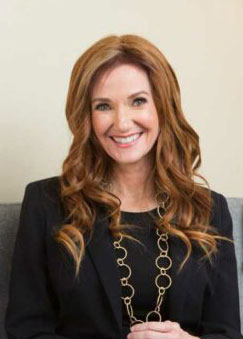
Certified Gottman Therapist
Licenses:
California LMFT #99008 | Texas LMFT #205614
Dr. Dana McNeil is a licensed marriage and family therapist and the founder of The Relationship Place, a San Diego couples therapy practice specializing in high-acuity relationships, emotional disconnection, conflict repair, and intimacy concerns. She has achieved the highest level of training in the Gottman Method Couples Therapy and is known for her compassionate, direct, and practical approach to helping couples rebuild trust, communication, and closeness.
She is also the founder of Therapy Getaway, a structured couples intensive model designed for couples seeking deep, focused relationship repair. Dana has specialized expertise in midlife marriage challenges, empty nest transitions, and gray divorce, and provides training and professional education for therapists, including work connected to the Gottman Institute.
Her expertise has been featured in national publications including Oprah Daily, Martha Stewart Living, Men’s Health, Bustle, and SELF Magazine.
She is passionate about helping couples move from feeling like roommates to rebuilding emotional and physical connection.
- Are We Creating a Culture of Still Faces? What the Still Face Experiment Teaches Couples About Screens - November 23, 2026
- Why Am I So Anxious in My Relationship? - October 9, 2026
- Breadcrumbing in a Relationship: Why Crumbs Never Add Up to a Cupcake - September 25, 2026
To reflect on the year gone by, set aside an hour for an end-of-year reflection somewhere without distractions, grab a pen and notebook, and work through a few honest questions: What was the best and worst of the year? What are you grateful for? What did you achieve? Where do you want to grow, and what do you want to do next year that you didn’t do this year? Then keep what you wrote somewhere you’ll see it again. If looking back stirs up more than you expected, one-on-one mental health therapy is a good place to sort through it.
Knowing how to reflect on the year gone by is a form of self-assessment so you can be a better version of yourself. With an end-of-year reflection, you’ll assess your own performance from an impartial and honest perspective. You’ll sit down and focus on how well you did in some areas, which areas you should improve on, and how you’ll improve on them.
Of course, there will be certain areas you won’t be proud of. And that’s okay. You can’t erase the mistakes you made or mull over what you think you should’ve done. But you can extract lessons from those highs and lows, in the name of becoming an even better version of yourself next year.
Here’s why it’s worth doing, and how to do it.
Why Should You Do an End-of-Year Reflection?
For You
Looking back on the past year gives you the opportunity to improve your performance in the new year.
By reviewing the key points of your year and approaching them without judgment, you can make a conscious decision to change. For instance, instead of brooding over the fact that you didn’t do your best at work, you can decide to question the “why” behind it. Otherwise, you’d just carry on with the same behaviors.
When done often, self-reflection can give you tools to deal with similar situations in the future.
For Your Partner
When you take enough time to look inward, you get better at understanding your own feelings so you can communicate with your partner better. You know exactly why you got mad over those dirty dishes. It’s not because your partner didn’t wash them, but because you had an exhausting day at work.

On realizing that, you may discover that many silly arguments you’ve started had more to do with how you were feeling at the moment.
This is a form of self-knowledge. It helps you communicate better, but also to understand someone else’s feelings better. Encouraging your partner to do the same will benefit your relationship from both sides.
For The People Around You
Again, it’s hard to understand others when you don’t understand yourself. In two studies of more than 700 college students, summarized by UC Berkeley’s Greater Good Science Center, people who were more aware of their own emotions were better at recognizing what other people were feeling.
Higher self-awareness helps you improve your relationships. It helps you understand the root of your own emotions, and consequently why other people feel or react a certain way. As a result, you become more pleasant to be around.
Of course, that doesn’t mean people are allowed to bother you. With self-awareness comes an understanding of what you don’t like and the type of people you don’t want in your life. Use that knowledge to protect your own energy and peace of mind.
How Do You Reflect on the Past Year?
Why Should You Write Your End-of-Year Reflections Down by Hand?
Writing things down is a powerful practice most of us undervalue. Ideally, you should use a good ol’ pen and a notebook for this entire self-evaluation exercise.
“Okay. But isn’t typing on my notes the same thing?”

Not really. Compared with typing, writing longhand helps you recall information better. The movements and frills you create with a pen or pencil require your undivided attention. Think about it: if your attention shifts even for a second, you might end up scribbling nonsense.
When typing, we have corrective tools such as grammar checkers, so it’s a more automatic activity. That’s what makes writing longhand a powerful mindfulness exercise.
By writing down your end-of-year reflections, you can keep a record of experiences you’ll have access to forever. If you don’t lose your notebook!
What Was the Best? What Was the Worst?
Can you pinpoint the best thing that has happened to you this year? What about the worst thing?
You don’t necessarily have to revisit or describe a traumatic event. That’s not what we want. Just take note of these moments so you can remember one thing: No matter what happened, you’re still here.
Whatever happens next year, these notes will work as a reminder of how strong you are – and how things get better, worse, and then better again. And again.
Look at Areas Where You Want to Improve On
This will vary from person to person. Some people will want to be better parents. Others will want to excel at their jobs. Others will want to start and stick to a self-care journey; these tips on building self-care habits can help. It depends.

You don’t have to improve in all areas of life. You wouldn’t even have time for that. The purpose of a yearly self-reflection is to find your most important areas of improvement.
Here are a few areas to get you started:
- Career
- Mental health
- Physical health
- Relationships
- Finances
- Self-care
- Personal growth
- Fitness
Think of yourself as an artwork in the making. Once you improve a spot, you can always move on to the next one.
What Are You Grateful for?
People who practice gratitude deal better with adversity, strengthen their relationships, and enjoy greater experiences. All because gratitude is associated with increased happiness.
This was pointed out in a 10-week study, in which groups who kept gratitude journals felt better about their lives, exercised more, and had fewer trips to the doctor. Gratitude works inside a relationship too; here are some ways to show gratitude in marriage.
This gratitude exercise can be as easy as jotting down a few bullet points. Next, ask yourself:
What am I grateful for?
Words and images will start popping into your head. Dog. Family. Friends. School. Someone’s name. Whatever you’re genuinely happy to have in your life…write it down.
What Are the Goals You’ve Achieved?
Don’t be modest here. As small as it may have been, you’ve achieved something worth noting this year. Whether it was a promotion, going to therapy, starting a relationship, or conquering an illness, you did something great.
It’s easy to dwell on a cycle of “it wasn’t even that big of a deal.” But who were you the past year? And how does that person compare to who you currently are? Your achievements along the way, the big and the small, made you who you are today.
What Haven’t You Done This Year That You’d Like to Do Next Year?
Our routines are hectic. We don’t always get to do what we’d like to do.
Maybe you wish you’d gone hiking. Taken that course. Learned a new language. What haven’t you done that you wish you had? And what got in your way of accomplishing those things?
This isn’t about blaming yourself for not having done them. It’s simply about keeping them in mind. This section may act as a reference you could revisit to draft next year’s plans.
Write. Just…Write.
Freewriting, stream-of-consciousness writing, or simply “brain dump” is a way to clear your mind. At the moment, your internal monologue may be saying a bunch of things. It never stops babbling. Just write what pops into your mind, as it comes.
The purpose of this exercise is to just write. Without worrying about what you’re writing and how you’re writing it. Just, quite literally, putting ideas to paper. This might help you uncover specific worries, motivations, and even spark up some ideas.
Because you could go on and on, set a timer for, say, 3 minutes. And just pour your heart out.
(Yes, your hand will hurt. But it’ll be worth it.)
Examine What You’ve Written and Keep It Close to You
It can be easy to let your end-of-year reflection collect dust among a pile of unfinished notebooks. While you don’t have to keep it on your desk or your bedside table, keep it somewhere close. You’ll want to revisit your musings throughout the new year.
This way, you can marvel at everything you’ve accomplished but would have forgotten otherwise.
When Should You Start Your End-of-Year Reflection?
Now that you know what to do, make your past-year reflection a priority. Get one of those unused or half-used notebooks you’ve got. Choose a distraction-free zone. And get to it! Give yourself the feedback you need to end this year with a bang.