

Certified Gottman Therapist
Licenses:
California LMFT #99008 | Texas LMFT #205614
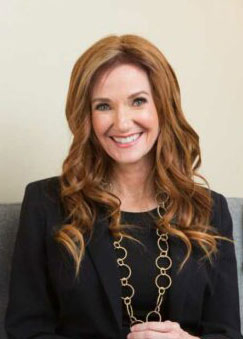
Dr. Dana McNeil is a licensed marriage and family therapist and the founder of The Relationship Place, a San Diego couples therapy practice specializing in high-acuity relationships, emotional disconnection, conflict repair, and intimacy concerns. She has achieved the highest level of training in the Gottman Method Couples Therapy and is known for her compassionate, direct, and practical approach to helping couples rebuild trust, communication, and closeness.
She is also the founder of Therapy Getaway, a structured couples intensive model designed for couples seeking deep, focused relationship repair. Dana has specialized expertise in midlife marriage challenges, empty nest transitions, and gray divorce, and provides training and professional education for therapists, including work connected to the Gottman Institute.
Her expertise has been featured in national publications including Oprah Daily, Martha Stewart Living, Men’s Health, Bustle, and SELF Magazine.
She is passionate about helping couples move from feeling like roommates to rebuilding emotional and physical connection.
- Breadcrumbing in a Relationship: Why Crumbs Never Add Up to a Cupcake - September 25, 2026
- Dr. Dana McNeil Featured in Good Housekeeping: The Real Lesson Behind “Gummy Bear Mom” Parenting - September 9, 2026
- Why the Gottman Method Works So Well for Same-Sex Couples - August 31, 2026
Featured in Good Housekeeping: “Here’s What’s Great About Becoming a Mom in Your 40s” 5/10/26
There’s a lot of conversation right now about women becoming mothers later in life. Many are curious about the experiences and challenges of becoming a mom in your 40s.
And while the focus is often on what might feel harder—energy, timing, or starting again—what I see in my work tells a more nuanced story about motherhood at 40.
Because for many women, becoming a mom in their 40s doesn’t feel like starting over.
It feels different.
You’re Not Trying to Figure Yourself Out at the Same Time
Earlier in life, motherhood often overlaps with everything else you’re still building. For those becoming a mom at age 40, your priorities and confidence may feel much more stable.
You’re figuring out your career, your relationships, your identity, and how a child fits into all of that. There can be a lot of pressure—both internal and external—to get it right. And that pressure often shows up as guilt.
Am I doing enough at home?
Am I doing enough at work?
Should I be choosing one over the other?
By the time many women become mothers in their 40s, that tension has often shifted. In fact, the experience of becoming a mom later, at 40 or beyond, brings new clarity.
There’s usually more clarity about who you are and what matters to you. You’re less focused on trying to meet expectations and more focused on building a life that actually fits.
You’re Parenting Without the Same Rules You Grew Up With
Many women also recognize that the model they were raised with doesn’t fully apply anymore. For those becoming a mom at 40, parenting may look different from previous generations.
The expectations placed on mothers today are different—and in many ways, less clearly defined. While that can feel uncertain at times, it also creates space.
You’re not trying to follow a single blueprint.
You’re making decisions based on what works for your life now, and for some, becoming a mom at age 40 means letting go of outdated rules.
The Isn’t “Can I Do It All?”
One of the Question most common concerns I hear sounds something like:
Can I still do this? What if I’m not as strong as I used to be? Can I handle everything this requires and not lose myself in the process?
It’s a stage of life you haven’t been in before. The skills feel familiar, but the context is different, and that can bring its own set of unknowns. For those becoming a mother at 40, this chapter brings new opportunities.
What I often see is that it doesn’t play out the way women fear it will.
Because by this point, there’s a deeper understanding of capacity.
You know what it takes to stay grounded. You’re more aware of your strengths—and the places where you need support.
And that changes how you approach motherhood. For women becoming a mom at 40, this can mean embracing support and resilience.
You Don’t Have to Do It Alone
There are often unspoken assumptions about who is responsible for what in a family. And sometimes, becoming a mom at 40 involves updating these traditions.
And many women have spent years carrying more than their share without even realizing it.
This stage can be an opportunity to shift that. Especially for those becoming mothers at age 40, sharing responsibilities is empowering.
We often hear the phrase “it takes a village,” but in real life, that doesn’t always mean a large support network. Sometimes it starts with your own family—your partner, your older children, and how responsibility is shared inside the home.
Older kids don’t need to take on a caregiving role, but they do benefit from being included.
When they’re left out, they don’t stay neutral—they can feel unsure where they fit.
When they’re included, even in small ways, they gain something important. They learn how to notice others, how to step in, and how to be part of something bigger than themselves. This dynamic is often part of the experience for those becoming a mom at 40.
And children benefit from having more than one person they can turn to.
More than one person who can listen.
Help.
Show up.
That’s not a loss—it’s an expansion of support.
Your Life Doesn’t Have to Shrink
One of the things I hear most often from women in this stage of life is a desire for more space—not less. When becoming a mom at 40, prioritizing time for yourself can become more important than ever.
They want time with friends.
Time with their partner.
Time to do the things that help them feel like themselves.
Bringing another child into the family doesn’t mean that disappears.
In many cases, it actually reinforces how important it is not to lose yourself in the process. Especially when you’re becoming a mom at age 40, self-care takes on new meaning.
What Really Matters Shifts
Over time, many women come back to the same realization. For mothers becoming a mom as late as 40, priorities often shift in impactful ways.
It’s not about doing more—it’s about how you show up.
Trying to be everything often leads to burnout, and that doesn’t serve anyone.
Staying connected to yourself while you parent is what allows you to be present in a way that actually lasts.
This Isn’t Starting Over
Becoming a mom again in your 40s isn’t about going back to who you were. This journey of becoming a mom at 40 means embracing who you’ve become.
It’s about showing up as who you are now.
And for many women, that version is:
- more grounded
- more self-aware
- more intentional
And in many ways, more prepared than they think. Especially when becoming a mom later in life, confidence and intuition are strong assets.
When Life Changes, Relationships Need Support Too
Major life transitions—like growing your family later in life—don’t just impact you individually. For couples becoming parents and moms at age 40, relationships may require extra attention and support.
At Therapy Getaway, we work with couples who are navigating these exact kinds of changes. Whether you’re adjusting to a new baby, redefining roles, or trying to stay connected while life gets full, our intensives are designed to help you slow down, reconnect, and move forward with clarity.