

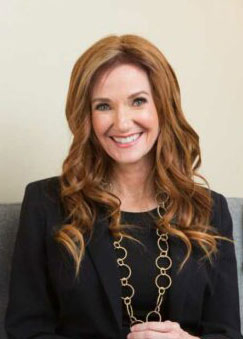
Certified Gottman Therapist
Licenses:
California LMFT #99008 | Texas LMFT #205614
Dr. Dana McNeil is a licensed marriage and family therapist and the founder of The Relationship Place, a San Diego couples therapy practice specializing in high-acuity relationships, emotional disconnection, conflict repair, and intimacy concerns. She has achieved the highest level of training in the Gottman Method Couples Therapy and is known for her compassionate, direct, and practical approach to helping couples rebuild trust, communication, and closeness.
She is also the founder of Therapy Getaway, a structured couples intensive model designed for couples seeking deep, focused relationship repair. Dana has specialized expertise in midlife marriage challenges, empty nest transitions, and gray divorce, and provides training and professional education for therapists, including work connected to the Gottman Institute.
Her expertise has been featured in national publications including Oprah Daily, Martha Stewart Living, Men’s Health, Bustle, and SELF Magazine.
She is passionate about helping couples move from feeling like roommates to rebuilding emotional and physical connection.
- Breadcrumbing in a Relationship: Why Crumbs Never Add Up to a Cupcake - September 25, 2026
- Dr. Dana McNeil Featured in Good Housekeeping: The Real Lesson Behind “Gummy Bear Mom” Parenting - September 9, 2026
- Why the Gottman Method Works So Well for Same-Sex Couples - August 31, 2026
Have you ever left an argument with your partner feeling confused about what actually happened — not just hurt or frustrated, but genuinely unsure whether your own memory can be trusted? If so, you’re not alone. And there may be a name for what you’ve been experiencing.
Gaslighting has become one of the most frequently discussed topics in couples therapy today. While the word itself has become something of a cultural shorthand, the behaviors behind it are very real — and they can quietly erode a partner’s confidence, emotional safety, and sense of self over time.
Recently, our founder Dr. Dana McNeil was featured on the Gottman Institute’s blog, where she shared her clinical perspective on gaslighting as a challenging behavior in couples therapy. In this post, we want to bring that conversation directly to you.
What Is Gaslighting, Really?
Gaslighting is a pattern of behavior in which one partner — often without fully realizing it — causes the other to doubt their own experiences, perceptions, and memory of events. It’s not just a heated disagreement or a difference of opinion. It’s a dynamic in which one partner’s reality is consistently minimized, dismissed, or rewritten.
As Dr. McNeil has observed in her San Diego practice, gaslighting often shows up in subtle but consistent ways:
- Implying that you misunderstood what was said, rather than acknowledging the impact of their words
- Suggesting you’re overreacting or being too sensitive
- Questioning whether an event actually happened the way you remember it
- Cutting you off during conflict so that your perspective never fully lands
- Responding to your hurt feelings with indifference rather than care
Over time, these patterns cause the partner on the receiving end to internalize a painful story: Maybe I’m the problem. Maybe I’m too much. Maybe I just need to try harder.
Why Does It Happen?
It’s important to understand that gaslighting doesn’t always come from malice. In Dr. McNeil’s clinical experience, the partner engaging in these behaviors is often struggling in their own right. They may have low self-esteem and limited tools for managing difficult emotions. They may feel so out of control in the relationship that they reach for power in ways that feel instinctive but are ultimately harmful. They may want to “fix” their partner’s feelings — and when they can’t, minimizing those feelings feels easier than sitting with discomfort.
This doesn’t excuse the behavior. But it does open a door to something more hopeful: change is possible, especially when both partners are willing to do the work.
What This Looks Like in a Therapy Session
If you’ve wondered whether what you’re experiencing in your relationship counts as gaslighting, here are some phrases that often appear in couples therapy sessions:
- “That never happened.”
- “You’re making things up.”
- “You’re being dramatic.”
- “I’m sorry you feel that way.” (Note the subtle shift — this places the problem in your feelings, not in their behavior.)
These statements may feel like conflict, but their cumulative effect is something more serious: they make one partner stop trusting themselves.
How Couples Therapy Helps
By the time most couples seek therapy for these dynamics, the partner who has been gaslit has often lost confidence in their own perspective. One of the most important things we do in the early stages of treatment is validate that partner’s experience — not to assign blame, but to help both people understand the pattern they’ve fallen into and what it’s costing the relationship.
Using Gottman Method principles, we work to help couples:
- Understand that each person holds a subjective reality — and that both realities matter
- Build the skill of validating a partner’s feelings, even when you see things differently
- Replace defensive communication patterns with softer, more accountable ways of engaging
- Process conflict as a path to understanding, rather than a threat to defend against
The goal isn’t to declare a winner. It’s to create a relationship where both partners feel emotionally safe enough to be honest — and to trust that their experience of the relationship will be received with care, not dismissed.
You Don’t Have to Keep Questioning Yourself
If you’ve been feeling confused, dismissed, or like you can’t trust your own memory in your relationship, that experience deserves to be taken seriously. It also deserves professional support.
The therapists at The Relationship Place specialize in working with couples navigating exactly these kinds of dynamics — including the complex, often invisible patterns that make one or both partners feel unseen.
We’re here when you’re ready. Contact us at (619) 535-8890 or in**@*****************ce.com to schedule a consultation.
Dr. Dana McNeil, PsyD, LMFT, CGT is the founder of The Relationship Place and a recognized expert in couples therapy, featured in national media and on the Gottman Institute’s blog. Her insights on gaslighting as a challenging behavior in couples therapy can be read in full at Gottman.com.