

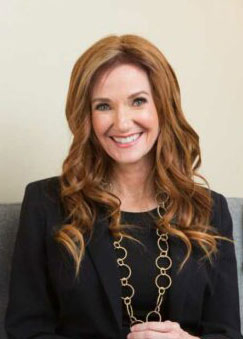
Certified Gottman Therapist
Licenses:
California LMFT #99008 | Texas LMFT #205614
Dr. Dana McNeil is a licensed marriage and family therapist and the founder of The Relationship Place, a San Diego couples therapy practice specializing in high-acuity relationships, emotional disconnection, conflict repair, and intimacy concerns. She has achieved the highest level of training in the Gottman Method Couples Therapy and is known for her compassionate, direct, and practical approach to helping couples rebuild trust, communication, and closeness.
She is also the founder of Therapy Getaway, a structured couples intensive model designed for couples seeking deep, focused relationship repair. Dana has specialized expertise in midlife marriage challenges, empty nest transitions, and gray divorce, and provides training and professional education for therapists, including work connected to the Gottman Institute.
Her expertise has been featured in national publications including Oprah Daily, Martha Stewart Living, Men’s Health, Bustle, and SELF Magazine.
She is passionate about helping couples move from feeling like roommates to rebuilding emotional and physical connection.
- Why Am I So Anxious in My Relationship? - October 9, 2026
- Breadcrumbing in a Relationship: Why Crumbs Never Add Up to a Cupcake - September 25, 2026
- Dr. Dana McNeil Featured in Good Housekeeping: The Real Lesson Behind “Gummy Bear Mom” Parenting - September 9, 2026
Insight from Dr. Dana McNeil, Certified Gottman Therapist
When The Gottman Institute needed a clinician to write honestly about whether its own method truly serves same-sex couples, they turned to Dr. Dana McNeil, co-founder of The Relationship Place and a Certified Gottman Therapist. Her article for Gottman.com, “Finding the Right Approach to Therapy with Same-Sex Partners,” is the kind of piece that could only come from someone who has spent years in the room with gay and lesbian couples, asking a question many therapists never think to ask: was the theory I was trained in actually built with my client in mind?
A theory built for a different starting point
Dr. Dana’s inquiry began with a historical observation that’s easy to overlook. Most established couples therapy models were developed around the goal of preventing divorce — a framework that assumes access to marriage in the first place. For a large share of her caseload, that access didn’t legally exist until the Supreme Court’s 2015 ruling in Obergefell v. Hodges. A method calibrated to “save the marriage” carries hidden assumptions when the couple in front of you has only recently been allowed to have one.
Same goals, different terrain
Dr. Dana is careful not to overcorrect into treating same-sex couples as entirely distinct from heterosexual ones. Drawing on research by Riggle and colleagues, she notes that both populations come to therapy wanting the same core things: better communication, shared values, and a felt sense of support and commitment.
What differs is the terrain those goals sit on. Citing work by Macapagal and colleagues, she points to layers of experience that heterosexual couples rarely have to navigate — the developmental process of accepting one’s own identity, the ongoing calculus of whether and when to disclose the relationship to family or colleagues, differing norms around monogamy and commitment milestones, and disparities in HIV-related risk. She also draws on research showing that internalized shame from years of concealment can quietly erode a couple’s capacity for emotional intimacy, and that ambivalence about adopting heteronormative markers of commitment — engagement rings, wedding traditions, shared last names — can leave couples unsure which relationship “scripts” are even meant for them.
What the research actually shows
This is where Dr. Dana’s clinical curiosity meets the data. She cites a Gottman Institute outcome study (Garanzini et al., 2017) that tracked relationship satisfaction across five points in treatment for gay and lesbian couples using the Gottman Method. The results were striking: same-sex couples improved more than twice as much as the typical heterosexual couple, in roughly half the number of sessions.
Dr. Dana doesn’t just report the finding — she interprets it. Her read is that same-sex partners often benefit from a smaller gender-role gap than heterosexual couples do; without the inherited script of “his job, her job,” partners are more likely to arrive already sharing similar communication norms. That common ground gives the Gottman Method’s structured tools — replacing criticism, contempt, defensiveness, and stonewalling with repair, appreciation, and self-soothing — more room to work quickly, particularly around real friction points like division of household labor, finances, and emotional support.
Holding the method and its limits at once
What makes Dr. Dana’s piece worth reading isn’t just the endorsement of the Gottman Method — it’s her refusal to stop there. She closes by pushing the field further, noting that most research still treats “same-sex couples” as a single category, when gay male and lesbian relationships often carry distinct gender-linked communication patterns and life experiences that deserve to be studied — and treated — on their own terms. That’s the posture of a clinician who trusts the evidence enough to use it, and trusts her clients enough to keep questioning it.
Bringing it into the room
At The Relationship Place, this same research-informed distinction shapes how Dr. Dana works with every same-sex couple she sees — using the Gottman Method’s evidence base while staying attentive to the minority stress, identity development, and family-of-origin dynamics that make each couple’s path to the therapy room different from the next. It’s a distinction that only comes from combining deep clinical experience with the humility to keep asking whether the theory still fits the person in front of you.
If you’re looking for a couples therapist who brings that level of research and nuance to LGBTQ+ relationship work, Dr. Dana McNeil and the team at The Relationship Place are here to help.
Reference: McNeil, D. (2021, updated 2026). Finding the Right Approach to Therapy with Same-Sex Partners. The Gottman Institute.
https://www.gottman.com/blog/finding-the-right-approach-to-therapy-with-same-sex-partners/