

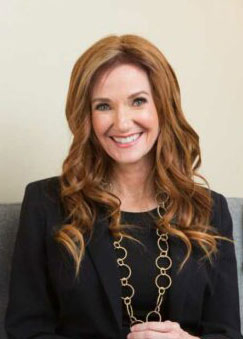
Certified Gottman Therapist
Licenses:
California LMFT #99008 | Texas LMFT #205614
Dr. Dana McNeil is a licensed marriage and family therapist and the founder of The Relationship Place, a San Diego couples therapy practice specializing in high-acuity relationships, emotional disconnection, conflict repair, and intimacy concerns. She has achieved the highest level of training in the Gottman Method Couples Therapy and is known for her compassionate, direct, and practical approach to helping couples rebuild trust, communication, and closeness.
She is also the founder of Therapy Getaway, a structured couples intensive model designed for couples seeking deep, focused relationship repair. Dana has specialized expertise in midlife marriage challenges, empty nest transitions, and gray divorce, and provides training and professional education for therapists, including work connected to the Gottman Institute.
Her expertise has been featured in national publications including Oprah Daily, Martha Stewart Living, Men’s Health, Bustle, and SELF Magazine.
She is passionate about helping couples move from feeling like roommates to rebuilding emotional and physical connection.
- Why Am I So Anxious in My Relationship? - October 9, 2026
- Breadcrumbing in a Relationship: Why Crumbs Never Add Up to a Cupcake - September 25, 2026
- Dr. Dana McNeil Featured in Good Housekeeping: The Real Lesson Behind “Gummy Bear Mom” Parenting - September 9, 2026
The benefits of same-sex parenting include children who are deliberately planned and wanted, parents who share roles based on strengths rather than gender stereotypes, kids who tend to be resilient and open-minded, strong school involvement and academic outcomes, and children whose emotional health matches that of their peers. Decades of research show that what matters most for children is loving, stable parenting, not the parents’ gender or sexual orientation. If you’re planning a family, affirming therapy for same-sex couples can support you along the way.
According to the Williams Institute at UCLA, about 5 million children in the United States live with an LGBTQ parent, and the number of visible LGBTQ families continues to grow.
While having homosexual parents was once seen as a disadvantage for the children, we have come a long way as a society since then. Because of the growing visibility of same-sex families, many researchers have begun to take a second look at the well-being of their children.
Recent studies show that children of same-sex parents do just as well as children of different-sex parents, and in some areas they may have advantages. Here’s what the research says.
How Does Same-Sex Parenting Affect Child Well-Being?
Many people wonder if there are harmful consequences of kids being born into single-sex families. It’s only natural to question whether they’ll face discrimination and stigma, especially since society hasn’t historically been as accepting of gay households. Fortunately, many studies have disproved this theory in recent years.
One study from Cornell University shows that the well-being of children with same-sex parents is no worse than their peers. The findings are based on 75 case studies over three decades. It’s important to note that this study refers to children who were raised by homosexual parents from birth, not those who later gained same-sex parents after a family disruption.
It just goes to show that these children are not at a disadvantage in any way due to the gender or sexual orientation of their parents. Rather, their parents’ competence and security determine their well-being, just like the kids of heterosexual couples.
A 2014 review in Population Research and Policy Review, prepared for an American Sociological Association amicus brief, examined a decade of research and found a clear consensus that children raised by same-sex parents fare as well as children raised by different-sex parents. There is no way to make a broad generalization about homosexual or heterosexual households without taking a look at their socioeconomic circumstances and family stability.
What Are the 8 Benefits of Same-Sex Parenting?
1. Same-Sex Parents Choose to Have Kids
In 2011, 45 percent of pregnancies in the United States were unintended, according to the Guttmacher Institute. Unintended pregnancy can be a major challenge for couples who aren’t mentally or financially prepared to have a child. Sadly, this can have adverse effects on both the mother and baby’s mental and physical health. On the other hand, same-sex parenting is a conscious decision — there’s nothing accidental about it. Parents who go to great lengths to have a baby are usually prepared financially and are more motivated to take care of them. Intentional pregnancies ensure the children are wanted and are welcomed into a loving home.

2. Children Aren’t Confined by Gender Stereotypes
One of the greatest same-sex parenting benefits is that the couple breaks free from traditional gender stereotypes and social constructs. Rather than having one parent who is more “fatherly” and “motherly,” gay and lesbian couples tend to rely on their particular skills when parenting. Since LGBTQIA+ couples focus on their strengths, children see that roles are about strengths, not gender.
3. Children Raised by Same-Sex Parents Are Resilient
It’s no secret that children raised by same-sex parents may have to face adversity at one point or another. Due to the nature of their parents’ relationship, they may automatically experience the impact of social stigma within the family.
The truth is, as far as we’ve come as a society, homophobia, and heterosexism still exist. Being able to navigate these issues helps raise more resilient children who can stand strong in the face of adversity. Learning to handle these challenges with supportive parents can help children build resilience.
4. Children Raised by Same-Sex Parents Are Open-Minded
Naturally, children raised by homosexual parents are more accepting of others’ relationships and lifestyle choices. The parents set a positive example of diversity, which can help kids grow up open-minded and accepting of differences.
5. Children Raised by Same-Sex Parents Do Well Academically
Kids of same-sex parents do well in school. A 2020 study by Mazrekaj, De Witte and Cabus in the American Sociological Review, using national data from the Netherlands, found that children raised by same-sex couples scored higher on standardized tests at the end of primary school and were more likely to finish secondary school. The researchers linked this partly to same-sex parents’ higher average socioeconomic status.
6. Same-Sex Parents Often Share Parenting More Equally
Without default gender roles to fall back on, same-sex couples often divide childcare and household work more evenly, with both parents playing an active role. Children benefit from having two engaged parents, and from parents who teach them to accept others and themselves.
7. Same-Sex Parents Are Involved in Their Children’s Education
A 2008 study by GLSEN, Involved, Invisible, Ignored, found that LGBT parents make their presence known in their schools and communities. This may be because the parents are more likely to experience stigma and bias from society, so they tend to assert their same-sex visibility. Because of this, many of the parents become more engaged in school functions, committees, and PTA boards. This is an important benefit of same-sex parenting that many people overlook.
Parent involvement in school is linked to better outcomes for children in general, including attendance and social skills.
8. Kids Raised by Same-Sex Parents Are Emotionally Healthy
Many people once believed that children were “better off” with a father and a mother. However, recent findings show that this simply isn’t true. The psychological well-being of children of homosexual parents has proven to be equal to those of kids with heterosexual parents.
In a 2016 study using the National Survey of Children’s Health, published in the Journal of Developmental and Behavioral Pediatrics, parents were asked to provide feedback on their children’s emotional and mental health difficulties. They filled out a “strengths and difficulties” questionnaire (SDQ), providing insight into whether they were well-behaved, worried, or unhappy. The researchers found no differences in emotional health between children of female same-sex parents and children of different-sex parents.
What Fertility and Adoption Issues Do Same-Sex Couples Commonly Face?
Thanks to advancements in technology, homosexual couples and even heterosexual couples struggling to conceive, can have children through a variety of different conception methods, as well as adoption.
Fertility treatments are highly advanced these days. However, each comes with its own pros and cons. Some of the most common options for same-sex couples to have a baby include:
1. Third-Party Reproduction
Third-party reproduction is the term for anytime an outside party is needed to provide an egg or sperm. This also refers to a woman who agrees to be a gestational carrier for the parents, without being the intended parent. In every case, there is an outside individual involved, other than someone who plans to raise the child. There are a variety of third-party reproduction options to choose from, such as:
- A known donor that may be a friend or acquaintance
- An anonymous donor that you have no information about
- Semi-open donor with limited information about the donor and limited contact through an intermediate person
- Or an open donor with whom you have information and direct contact with
It’s important to understand that there are always some risks and benefits involved with choosing a donor that you know. The procedure could bring you closer together or it could be damaging to the relationship. Plus, there are always legal issues that could arise if the procedure doesn’t take place with a lawyer involved. It’s always best to make arrangements through a legal clinic or fertility bank.
2. Sperm Donor Insemination
Sperm donor insemination is a great option for lesbian couples hoping to conceive. However, going this route can cost anywhere between several hundred dollars to 4 thousand dollars. It depends on which procedure you decide on and how long it takes you to get pregnant. Intracervical insemination is generally more affordable than intrauterine insemination, but IUI is proven to have a higher chance of success.
Keep in mind that it’s common for cisgender couples to take several months to get pregnant – and up to a year isn’t unheard of either. The same can be said for sperm donor insemination. The time and money spent depend on the fertility of the carrier. The more fertility procedures you have, the greater the cost.
Remember, sperm donor insemination should always take place at a licensed fertility bank. It may be tempting for families to find a donor on their own, but this comes with medical and legal risks. Sperm donors must go through genetic testing before being eligible to donate. Setting up an arrangement with someone outside of a clinic could automatically put the child at risk of health issues.
3. In Vitro Fertilization
In vitro fertilization (also known as IVF) is another standard option. It works by harvesting eggs from a woman’s ovaries, whether she is the parent or a donor. Then, in a lab, the eggs are combined with sperm from a donor. This option is not cheap, as it generally ranges from $15,000 to $20,000 per cycle.
Many lesbian couples choose reciprocal IVF, which allows one woman to provide the eggs and the other woman to carry the child. This is a great choice for couples who both want to play a role in the biological process. The partner who is younger or more fertile may wish to contribute the eggs, while the other will birth the baby. It’s important to note that this form of IVF is more expensive than traditional IVF. Not only will the carrier need to take fertility treatments to prepare, but a sperm donor is needed at an additional cost.
Another option is receiving IVF with an embryo donor. This is a good option for a variety of LGBTQIA+ families, as the embryo can be implanted in the parent or to a gestational carrier. This can cost anywhere between $30,000 to $40,000 per cycle.
4. Adoption
Lastly, adoption is a popular option for LGBTQIA+ couples of every kind. Many birth parents and agencies welcome same-sex couples as adoptive parents. Adoption can be incredibly rewarding, as it allows homosexual couples to fulfill their lifelong dreams of raising a child.
However, adoption can be a long, complicated process where many legal and financial issues pop up. Regardless, it’s a deeply fulfilling journey that is well worth it.

Where Can Same-Sex Couples Planning a Family Find Support?
Research has proven — the children of gay and lesbian parents are doing just fine. They grow up as well-adjusted as children from different-sex couples, and they may gain added strengths like resilience and open-mindedness.
But in the end, rather than sexual orientation being the determining factor, the most important thing is that the parents provide a loving, supportive, and diverse environment for their kids, which same-sex parents most certainly do.
It’s normal for every couple to have hesitations about having a baby and raising children, and same-sex couples often face added legal, financial and social questions along the way. This decision should be mutual for both partners. A therapist experienced with LGBTQIA+ families can help you work through it together; here are some myths about same-sex couples therapy, debunked. Call The Relationship Place at (619) 535-8890 to schedule a consultation.