
Certified Gottman Therapist
Licenses:
California LMFT #99008 | Texas LMFT #205614
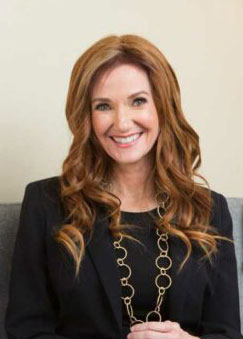
Dr. Dana McNeil is a licensed marriage and family therapist and the founder of The Relationship Place, a San Diego couples therapy practice specializing in high-acuity relationships, emotional disconnection, conflict repair, and intimacy concerns. She has achieved the highest level of training in the Gottman Method Couples Therapy and is known for her compassionate, direct, and practical approach to helping couples rebuild trust, communication, and closeness.
She is also the founder of Therapy Getaway, a structured couples intensive model designed for couples seeking deep, focused relationship repair. Dana has specialized expertise in midlife marriage challenges, empty nest transitions, and gray divorce, and provides training and professional education for therapists, including work connected to the Gottman Institute.
Her expertise has been featured in national publications including Oprah Daily, Martha Stewart Living, Men’s Health, Bustle, and SELF Magazine.
She is passionate about helping couples move from feeling like roommates to rebuilding emotional and physical connection.
- Why Am I So Anxious in My Relationship? - October 9, 2026
- Breadcrumbing in a Relationship: Why Crumbs Never Add Up to a Cupcake - September 25, 2026
- Dr. Dana McNeil Featured in Good Housekeeping: The Real Lesson Behind “Gummy Bear Mom” Parenting - September 9, 2026
No, an AI chatbot can’t replace couples therapy. It can help you organize your thoughts, learn relationship concepts, draft what you want to say and reflect between sessions. But it can’t see or hear you and your partner, can’t mediate between you, can’t diagnose or treat trauma or mental health problems, and can’t respond safely in a crisis. When your relationship is hurting, you need a licensed couples therapist. Here’s what couples therapy involves at our practice.
A client sat down in my San Diego office recently and said, “I had a long talk with ChatGPT last night.” She’d asked it for relationship advice and told it to “give it to her straight.” She laughed as she described how seen it made her feel in the moment, but she was clear that she didn’t want it replacing therapy. What she wanted was more tools for the moments when distress hits. Her comment stuck with me, and it raises a question many couples are asking: where does AI fit, and where does it fall short?
What Is AI Couples Therapy?
“AI couples therapy” usually refers to using a general chatbot like ChatGPT, or an app built for relationship support, to talk through relationship problems. Some apps offer guided exercises, conversation prompts or check-ins designed around models like the Gottman Method or attachment theory.
Despite the name, none of these are therapy. They aren’t delivered by a licensed clinician, they don’t assess your relationship, and they don’t carry the professional and legal responsibilities a therapist has. At The Relationship Place, a Gottman Method practice serving San Diego couples, we think the honest answer isn’t “AI or therapy.” It’s understanding what each is actually good at.
What Can an AI Chatbot Help a Couple With?
Used well, an AI tool can be a useful first step or a between-session support. It’s good for:
- Clarifying your thoughts before a hard conversation.
- Drafting what you want to say, or journaling prompts.
- Learning the language of relationship dynamics, like attachment styles, conflict cycles and the Gottman Method.
- Exploring ideas like love languages or emotional bids.
- Thinking something through privately when you feel overwhelmed.
It can help you feel heard, spark self-reflection or offer a new way of looking at a problem. That’s real value. It just isn’t therapy.
What Can an AI Chatbot Not Do for a Couple?
- It can’t see or hear you. Body language, tone and the moment-to-moment interaction between partners don’t reach a chat window.
- It only hears one side. A chatbot responds to whoever is typing, and it tends to be agreeable. That can make you feel validated while missing your partner’s perspective entirely.
- It can’t diagnose or treat. Trauma, depression, addiction, grief and infidelity call for clinical assessment and treatment.
- It can’t mediate. Couples therapy creates a structured, safe space where both people are heard without escalating or shutting down.
- It can’t hold you accountable. Insight is only half the work. A therapist helps you turn it into repair and lasting change.
- It can’t respond safely in a crisis. If there’s abuse, threats or thoughts of self-harm, you need a person, not a program.
Real couples therapy draws on specific, evidence-based approaches; here are the main types of couples therapy.
Is It Safe to Share Relationship Details With an AI Chatbot?
Be careful. Conversations with a general AI chatbot are not protected the way therapy is. A licensed therapist is bound by confidentiality laws and professional ethics; most chatbots are not covered by health privacy laws like HIPAA, and depending on the service and your settings, your conversations may be stored, reviewed or used to train future models.
Before sharing anything sensitive, check the app’s privacy settings and policy. Avoid including names, identifying details or information about your partner that they wouldn’t want shared. And remember that what you write about your partner reflects only your side of the story.
How Can You Use AI Alongside Couples Therapy?
- Before a session: use it to organize your thoughts and decide what you most want to talk about.
- Between sessions: ask for reminders of skills you’re learning, like a soft start-up or how to take a break during a fight.
- To practice: draft an “I” statement or an apology, then bring it to your partner or your therapist.
- For learning: read up on concepts your therapist mentions, then check what you learned in session.
Tell your therapist if you’re using AI, and treat its suggestions as ideas to discuss, not instructions to follow.
What Signs Mean You Need a Couples Therapist, Not an AI Chatbot?
- You’ve experienced betrayal, infidelity or a deep emotional injury.
- Your conversations keep landing in the same conflict, stonewalling or shutdown.
- One or both of you feel lonely, resentful or disconnected.
- You need support around sex, intimacy, parenting or a major life transition.
- You’re considering separation or divorce.
- There is any abuse, intimidation or concern about safety.
Not sure where to start? These tips on choosing a couples therapist can help. If you or someone you love is in crisis, call or text 988.
How Do You Start Couples Therapy at The Relationship Place?
Our clinicians work with couples using the evidence-based Gottman Method, through weekly sessions and private, customized intensives for couples who want deep progress in a short window. We don’t just hand over insight; we walk with you through the discomfort, the growth and the repair. We’re based in San Diego and see couples throughout the county.
Call (619) 535-8890 or contact us to schedule a consultation with a San Diego couples therapist. You can rebuild, and we’ll help you every step of the way.